Software Applications & Services Header Image


Software Applications & Services

Build Next-Gen Software for Discovery, AI, and Digital Transformation

May 20 - 21, 2026

The Software Applications & Services track examines how modern scientific software is evolving to meet the demands of AI-enabled, data-intensive R&D environments. The 2026 program focuses on building reliable, scalable digital foundations—spanning cloud-native research platforms, lab-of-the-future systems, workflow orchestration, user experience design, and enterprise software architectures that support secure, compliant, and interoperable science. Discussions explore emerging software engineering practices, challenges in sustaining public research infrastructure, the shift toward AI-ready digital systems, and the organizational changes required to support modern scientific applications. Attendees will learn practical approaches for designing, deploying, and governing software that accelerates discovery, strengthens collaboration, and enables resilient, future-ready R&D operations. Designed for software architects, research informatics leaders, product managers, digital transformation teams, and R&D IT decision-makers, this track delivers the strategic and technical insight needed to build and maintain the software ecosystems at the core of today’s biomedical innovation.

Tuesday, May 19

8:30 amRecommended Pre-Conference Workshops and Symposia*

On Tuesday, May 19, 2026, Cambridge Healthtech Institute is pleased to offer six pre-conference Workshops scheduled across two time slots (9:00 am–12:00 pm and 1:15–4:15 pm) and three Symposia from 8:30 am–3:45 pm. All are designed to be instructional, interactive, and provide in-depth information on a specific topic. They allow for one-on-one interaction and provide a great way to explain more technical aspects that would otherwise not be covered during the main conference tracks that take place Wednesday–Thursday.

*Separate registration required. Additional details:

Symposia: www.bio-itworldexpo.com/symposia

Workshops: www.bio-itworldexpo.com/workshops

PLENARY KEYNOTE PROGRAM

4:30 pm

Grab Your Seat! 25th Annual Golden Ticket Prize Giveaway & Organizer’s Remarks*

Cindy Crowninshield, Executive Event Director, Cambridge Healthtech Institute

*Must be present to win.

4:35 pm

Welcome Remarks from the City of Boston and the Office of Mayor Michelle Wu

Donald Wright, Interim Chief, Economic Opportunity & Inclusion Cabinet, City of Boston

4:40 pm PLENARY KEYNOTE INTRODUCTION:

Getting Ready for Effective AI: Starting with FAIR Principles

Diana Gamez Diaz, Head, Data & AI Engineering, RCH Solutions

4:50 pm PLENARY KEYNOTE PRESENTATION:

Rare Conversations: Explorations of the Research, Funding, and Advocacy for Rare Diseases

Thomas Bartlett, Ambassador, MG Uniter Myasthenia Gravis, Amgen

Catherine Brownstein, PhD, Manager, Molecular Genomics Core Facility, Boston Children's Hospital; Scientific Director, Manton Center for Orphan Disease Research Gene Discovery Core; Assistant Professor, Harvard Medical School

Morgan Cheatham, MD, Partner, Head of Healthcare & Life Sciences, Breyer Capital

Sebastien Lefebvre, Head of Technology, Data and AI, Aurelis Insights

Dylan V. Livingston, Founder and President, The Alliance for Longevity Initiatives (A4LI)

William Van Etten, PhD, Co-Founder, CEO & Principal Scientist, StarfleetBio

Susan J. Ward, PhD, Founder & Executive Director, cTAP

In a unique plenary series of intimate conversations, we will explore the models, drivers, and challenges facing rare disease research. By uniting leaders in precision medicine, bioinformatics, national rare-disease infrastructure, and real-world legislative advocacy, we will give attendees an expansive, cross-disciplinary view of what’s required to deliver faster, more accurate, and more equitable rare-disease cures.

6:00 pmWelcome Reception & 25th Anniversary Celebration in the Exhibit Hall with Poster Viewing

The Bio-IT Kickoff Reception is a reunion, reconnect with friends, explore cutting-edge research, and celebrate innovation! This year, join us in celebrating the 25th Anniversary of Bio-IT World Conference & Expo with cake and champagne as we mark a quarter century of advancing science and technology. Enjoy poster presentations, networking, and vote for the Best of Show and Poster awards.

7:15 pmClose of Day

Wednesday, May 20

6:30 amBio-IT World’s 5K Rise and Shine Fun Run! (Sponsorship Opportunities Available)

RUN COORDINATORS:
Bridget Kotelly, Senior Conference Director, Cambridge Healthtech Institute
Eileen Murphy, Conference Producer, Cambridge Healthtech Institute

Lace up and join Bio-IT’s Coordinators for the Fun Run on Wednesday, May 20! Sprint, jog, walk, or talk-your-way-through—ALL abilities are welcome. This informal event is all about getting moving together. Full details to come…just don’t forget your sneakers!

7:00 amRegistration and Morning Coffee

PLENARY KEYNOTE PROGRAM

8:00 am

Grab Your Seat! 25th Annual Golden Ticket Prize Giveaway & Organizer’s Remarks*

Allison Proffitt, Editorial Director, Bio-IT World and Clinical Research News

*Must be present to win.

8:05 am PLENARY KEYNOTE INTRODUCTION:

From Tools to AI Teammates: How AI-Driven Scientific Workbenches Can Redefine the Scientist User Experience

Sayan Lahiri, Vice President, CLOVERTEX

Life sciences R&D is drowning in powerful tools, massive data, and advanced infrastructure—yet scientists still spend too much time managing environments, rerunning workflows, and navigating fragmented systems. The real bottleneck is no longer data or compute; it is the scientist’s user experience. In this plenary, we explore how Clovertex’s AI-driven scientific workbench called NUMEN is changing the role of technology from passive infrastructure to an active scientific collaborator. By embedding AI directly into the workbench, these platforms guide scientists in choosing the right compute, optimizing cost, enforcing reproducibility, tracking metadata, and scaling experiments seamlessly from exploration to production—all while governance and security remain invisible. AI-powered workbenches create a shared operating model where science moves faster, results are trusted, and innovation scales. The future of life sciences R&D will not be defined by more tools—but by intelligent platforms that work like a teammate alongside scientists.

8:15 am PLENARY KEYNOTE PRESENTATION:

The Collaboration Breakthrough: How Federated Learning Is Rewriting the Rules of Drug Discovery

Mohammed AlQuraishi, PhD, Assistant Professor, Systems Biology, Columbia University

Jonathan B. Gilbert, PhD, Senior Director, Ecosystem Growth and Contributor Partnerships, Eli Lilly and Company

José-Tomás Prieto, PhD, Director of AI Programs, Apheris

Woody Sherman, PhD, Founder and Chief Innovation Officer, PsiThera

Christina Taylor, PhD, Senior Science Fellow and Computational Molecular Design Lead, Bayer

Arman Zaribafiyan, PhD, Head of Strategic Alliances, AI Simulation, SandboxAQ

The pharmaceutical industry sits on a collective treasure trove of proprietary structural biology data, yet competitive concerns have historically prevented the data sharing necessary to train the most powerful AI models for drug discovery. Federated learning is changing this paradigm, enabling biopharma companies to collaborate on AI model training while keeping sensitive data secure and confidential. This plenary session explores the groundbreaking AI Structural Biology (AISB) Network, where industry leaders are pooling proprietary protein-ligand structure data to collaboratively train OpenFold3, an AI model designed to predict molecular interactions with precision approaching X-ray crystallography. Through the federated computing platform, thousands of experimentally determined protein–small molecule structures remain securely at their original locations while contributing to a shared learning framework that no single organization could achieve alone. This session reveals how federated learning solves the industry's most persistent challenge: unlocking collective intelligence while protecting intellectual property. ​Attendees will hear directly from consortium leaders about: 

  • The technical architecture enabling privacy-preserving collaborative AI training across competing organizations 
  • Real-world implementation of federated learning platforms and computational governance frameworks 
  • Strategic rationale for industry collaboration: why sharing model training beats going it alone 
  • Impact and outcomes from early OpenFold3 results in predicting binding affinities and accelerating small molecule discovery 
  • The future of collaborative AI in biopharma, from structural biology to clinical development

9:30 amCoffee Break in the Exhibit Hall with Poster Viewing (Sponsorship Opportunity Available)

Start your morning with coffee, connections, and cutting-edge research! Enjoy poster presentations, network in the Exhibit Hall, vote for awards, and a chance at a fabulous raffle prize!

MODERN SOFTWARE PLATFORMS & DIGITAL INFRASTRUCTURE FOR R&D

10:15 am

Organizer's Welcome Remarks

Leandra Almodovar, Room Operations Lead, Cambridge Healthtech Institute

10:20 am Chairperson's Remarks

Kai Zhang, Director, Marketing, Dassault Systemes

10:25 am

Software Applications & Services for Lab of the Future

Nevin Gerek Ince, PhD, Director, Research Digital Products, Novo Nordisk

This talk explores how digital technologies are transforming laboratory environments. We will discuss how advanced software solutions and cloud-based services enable automation, data integration, and collaboration in scientific research. Key topics include AI-driven analysis, electronic lab notebooks (ELNs), laboratory information management systems (LIMS), and secure cloud platforms. These innovations streamline workflows, enhance data accuracy, and support remote access, making labs more efficient, connected, and future-ready.

10:55 am

CAMEO: A Secure and Interoperable Digital Platform Enabling AI-Ready Data across Translational-Research Workflows

Ritesh Kumar, PhD, Associate Director, Research Informatics, Novartis

Translational research increasingly depends on secure and compliant management of complex patient sample data, including radioactive and isotopically labeled assays. To overcome workflow fragmentation and data integrity challenges, we developed CAMEO, an AI-ready digital platform that streamlines secure data exchange, automates device interactions, and standardizes review and approval processes. By enabling interoperability, compliance, and future AI integration, CAMEO accelerates data reliability and digital transformation across experimental and clinical workflows.

11:25 am

Software-Defined R&D for Life Sciences: A Shared Foundation for Regulated AI

Aliaksandr Drapko, Delivery Manager (Real-time computing lab, former Deltix), EPAM Systems

Matthew Gorelik, Technical Product Manager, EPAM Systems

R&D teams want to use AI capabilities, but regulated software processes typically can't keep up to the speed of AI innovation. This presentation explains how a shared software substrate can close that gap with reusable building blocks, or primitives. With a solid foundation in place, the result is faster deployment of GxP, clinical, and executive AI workflows without compromising validation, governance, or compliance.

11:55 am Agentic AI–Orchestrated Authoring and QC across the Enterprise R&D Document Network

Will Chen, Head of Solutions, AlphaLife Sciences

Practical approaches to AI-orchestrated authoring and QC across the R&D document lifecycle—clinical, non-clinical, quality, safety, labeling, and submissions. We present an enterprise-grade AI authoring suite automating ~90% of CTD/ICH-aligned first drafts—off-the-shelf and extensible via AuroraPrime low-code tools so clients can self-define workflows and build agentic AI agents. Demo: Word add-in + web portal, RIM integrations, and doc-network change intelligence with impact analysis.

12:10 pm From Dark Data to Trusted Intelligence: AI-Powered Content Classification for Regulated Clinical Development

Manu Vohra, VP & Managing Dir, Global Life Sciences, Box Inc

Magnus Borgenstrand, Solutions Engineer, Box Inc

Biotech and clinical teams have accumulated years of regulated content that remains unclassified, hard to govern, and invisible to AI.

This session shows how Box Shield Pro uses agentic AI to: auto-classify IND, NDA, and BLA documents; identify GLP, GCP, and GMP content; and protect sensitive patient data and IP in CRO collaborations; reducing TMF classification time by 75% and building a compliant, AI-ready content foundation without adding headcount.

12:25 pm Own Your Architecture: A Practical Framework for Building Production-Ready Agentic Systems

Julie Pacheco, Vice President of Service, Integrant, Inc.

Bishoy Youssef, Solutions Architect, Integrant, Inc.

Most engineering leaders in pharma and biotech are being handed two options: buy an agentic platform or build it yourself. Both paths have a hidden cost. Packaged platforms abstract away the complexity that makes your workflows unique and charge you permanently for the privilege. Internal builds stall without the specialized engineering depth that production agentic systems actually require. This session presents a third path: a practical framework for partnering with a specialized agentic engineering team to design, build, and own architecture that scales with your workflows, not against them. 

12:55 pmTransition to Lunch

1:05 pmEnjoy Lunch on Your Own

1:35 pmRefreshment Break in the Exhibit Hall with Poster Viewing (Sponsorship Opportunity Available)

Bio-IT's hall is bigger than ever; one break won’t cut it! Enjoy dessert and coffee after lunch, explore booths and posters, vote for awards, and participate in our raffle for a chance to win a prize!

THE FUTURE OF PUBLIC DATA & SOFTWARE INFRASTRUCTURE: RISKS, FUNDING INSTABILITY, AND IMPACT ON BIOMEDICAL R&D

2:25 pm

Chairperson's Remarks

Douaa Mugahid, PhD, Data Officer, Hi-IMPAcTB Consortium, Harvard School of Public Health

2:30 pm

How Organizations Are Rewriting Data, Funding, and Infrastructure Strategies in Real Time

Anne Deslattes Mays, PhD, Principal, Science and Technology Consulting LLC
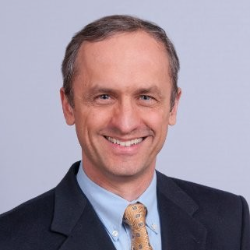
Sorin Draghici, PhD, Professor, Computer Science, Wayne State University; Chief Science Officer, AdvaitaBio
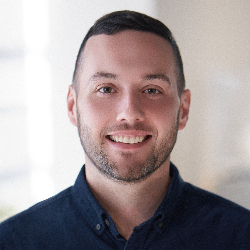
Joseph Flanagan, Senior Director, Data Product, Raven (RA Ventures)
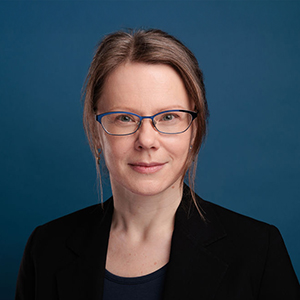
Eleanor A. Howe, PhD, Founder & CEO, Diamond Age Data Science
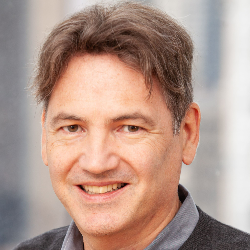
Andrew Marshall, PhD, Partner, Haystack Science

Douaa Mugahid, PhD, Data Officer, Hi-IMPAcTB Consortium, Harvard School of Public Health
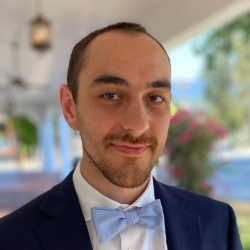
Lev Tsidilkovski, PhD, Scientist, Molecular Dynamics, Deep Origin

Public data and software infrastructure remain foundational to biomedical innovation, but the conversation has shifted. Rather than broad instability, recent policy and funding changes are creating targeted adjustments in priorities, governance, and access that are reshaping how scientific data is generated, shared, and sustained. This session focuses on how leaders across academia, government, and biopharma are actively adjusting their strategies in response. The discussion moves beyond awareness to execution, examining how organizations are changing how they generate, access, and rely on scientific data.

The session opens with insights from the Global Alliance for Open Science (GAFOS), launched at the 2025 Bio-IT World Conference & Expo. Drawing on input from more than 170 professionals across academia, biotech, pharma, government, and nonprofits, the survey highlights key concerns, emerging risks, and practical challenges related to public data and software infrastructure. Short talks and discussion will then examine how perspectives and strategies have evolved over the past twelve months. Where are risks still real? Where has the narrative corrected? What signals are driving decisions now? The session concludes with a moderated, interactive discussion between speakers and attendees.

Attendees will leave with a clear understanding of how data strategy, funding reliance, and infrastructure decisions are changing across the ecosystem, and what actions are required to operate effectively in this new environment.

4:30 pmBest of Show Awards Reception in the Exhibit Hall with Poster Viewing

Unwind with colleagues at our lively reception! Explore posters, vote for the best, network with exhibitors, enjoy a drink, and try to win a raffle prize. Celebrate Best of Show winners!

5:45 pmClose of Day

Thursday, May 21

7:00 amRegistration Open

CONTINENTAL BREAKFAST WITH BREAKOUT DISCUSSIONS (IN-PERSON ONLY)

7:00 amConnect & Collaborate: Breakfast Networking Roundtables (Sponsorship Opportunities Available)

Start the day with small-group roundtable discussions designed to spark collaboration and exchange insights across the Bio-IT community. Attendees join themed tables—spanning AI, data ecosystems, foundational models, and more—for focused, peer-driven discussions that foster problem-solving, connection, and cross-functional perspectives ahead of the plenary keynote.

IN-PERSON ONLY –

TABLE 1: Knowledge Graphs

Tom Plasterer, PhD, CEO & Co-Founder, Knowledge3

  • How are knowledge graphs supporting reliable scientific intelligence
  • Lessons from early deployments
  • Remaining challenges and barriers to scale​
IN-PERSON ONLY –

TABLE 2: From Molecules to Qubits: A Collaborative Conversation on Pharma’s Quantum Future

Christopher Bishop, Chief Reinvention Officer, Improvising Careers

  • Learn how leading global pharma companies are applying quantum principles to real-world research. 
  • Discover the quantum companies transforming traditional processes around drug development and drug discovery.
  • Discuss how quantum, along with HPC and AI, is poised to help researchers tackle historically intractable problems and potentially find new treatments for diseases like cancer, Alzheimer’s, and diabetes.​
IN-PERSON ONLY –

TABLE 3: From AI Tools to Autonomous Discovery: Are We Ready for Agentic AI in Drug Discovery?

Parthiban Srinivasan, PhD, Professor and Director, Centre for AI in Medicine, Vinayaka Mission's Research Foundation, India

  • Where are we today? Are AI tools truly integrated into workflows, or still operating in silos?
  • What changes with agents? How do LLM-based agents shift drug discovery from prediction to decision-making?
  • What is blocking autonomy? Data quality, validation, trust, or organizational readiness for AI-driven discovery?​
IN-PERSON ONLY –

TABLE 4: Bridging Tech Transfer and Industry: Unlocking Real Collaboration at Bio-IT

Nancy Wetherbee, Director Commercialization, Research Innovation Center, Northeastern University

  • Where are the highest-value collaboration opportunities between academia/TTOs and industry (biopharma, startups, AI/data, investors), and what makes them actually work?
  • What types of partnerships are most effective in practice (licensing, co-development, startup creation, sponsored research), and how do both sides evaluate quality and fit quickly?
  • What specific formats, access points, or structures at the Bio-IT event would actually drive follow-up, partnerships, and deal-making?
IN-PERSON ONLY –

TABLE 5: Supporting Innovation While Managing Risk: The CIO’s Dilemma in AI-Driven R&D

Chris Dwan, Fractional CIO, Triveni Bio

  • How do CIOs enable rapid AI and data innovation without breaking governance, compliance, or data integrity frameworks?
  • What separates pilot-stage innovation from scalable, production-grade systems? Where do most organizations fail?
  • How do leaders manage emerging risks (model bias, data provenance, regulatory exposure) while still pushing competitive advantage?
IN-PERSON ONLY –

TABLE 6: Real-World Data and Evidence: Unlocking Value Beyond Clinical Trials

Michael Liebman, PhD, Managing Director, IPQ Analytics, LLC

  • How real-world data is being used alongside clinical and experimental data
  • Challenges in standardization, access, and regulatory acceptance
  • Opportunities to improve outcomes, access, and long-term patient insights
IN-PERSON ONLY –

TABLE 7: Beyond Data Management: Why AI Fails without Institutional Memory in Life Sciences

Alexandra Brocato, CEO & Co-Founder, Beakr, Inc.

  • Why critical experimental knowledge is lost across ELNs, LIMS, and siloed teams, and the cost of reinventing work 
  • How structured experimental memory makes past decisions, failures, and context reusable across teams
  • How organizations can make scientific knowledge reusable for both humans and AI
IN-PERSON ONLY –

TABLE 8: Intellectual Property in Biotech: Strategy, Patents, and Trademarks

Elizabeth F. Jackson, Acting Director, Northeast Regional Outreach Office, U.S. Patent and Trademark Office

  • How to think strategically about IP early in biotech and AI-driven research
  • Common pitfalls in patent and trademark applications and how to avoid them
  • Navigating ownership, protection, and commercialization of innovations
IN-PERSON ONLY –

TABLE 9: Are Bioinformatics Workflows Broken? Rethinking Pipelines in the Age of No-Code and AI

Daniel Clarke, Biomedical Software Developer, Icahn School of Medicine at Mount Sinai

  • Why do current workflow systems fail most scientists in practice? 
  • Can no-code and AI-driven workflows meet standards for reproducibility, validation, and clinical readiness? 
  • What would a “production-ready” workflow ecosystem actually look like across teams and organizations?
IN-PERSON ONLY –

TABLE 10: Data Readiness for AI: Why Most AI Programs Fail Before They Start

Bahador Marzban, PhD, Principal Data Scientist, Innovative Medicine R&D, Johnson & Johnson

  • The gap between AI ambition and the reality of data foundations, platforms, and operating models
  • What “AI‑ready data” actually means in practice—beyond pilots, dashboards, and proofs of concept 
  • Where AI initiatives most often break down: data integration, data quality, metadata, and governance at scale​

PLENARY KEYNOTE PROGRAM

8:00 am

Grab Your Seat! 25th Annual Golden Ticket Prize Giveaway & Organizer’s Remarks*

Cindy Crowninshield, Executive Event Director, Cambridge Healthtech Institute

*Must be present to win.

8:05 am

Bio-IT World 2026 Innovative Practices Awards Ceremony (Winners Announced)

Allison Proffitt, Editorial Director, Bio-IT World and Clinical Research News

Since 2003, Bio-IT World’s Innovative Practices Awards have recognized outstanding technology innovation advancing life sciences research. The 2026 winners highlight excellence in open science, patient advocacy, global data access, and real-world AI through collaborations involving Arizona State University and Starfish Storage, CareDx, ASAP Discovery Consortium, and Novartis with Genedata AG. Together, these projects illustrate the modern R&D data lifecycle, from unlocking legacy data to enabling collaboration and driving clinical decision-making.

8:25 am

Bio-IT World 2026 Emerging Innovator Award—NEW (Winner Announced)

Allison Proffitt, Editorial Director, Bio-IT World and Clinical Research News

The Emerging Innovator Award recognizes one exceptional early-career researcher advancing the future of life sciences through breakthrough work in biomedical data, computational methods, or technology-enabled discovery. The 2026 awardee will deliver a 20-minute plenary keynote at Bio-IT World, highlighting the impact of their research and the forward-looking direction of their work. 

8:35 am

EMERGING INNOVATOR AWARD PRESENTATION: Scalable Connectomics for AI-Ready Brain Data

Ons M'Saad, PhD, Co-Founder & CEO, panluminate Inc.

Mapping the brain at synaptic resolution—connectomics—could transform neuroscience, medicine, and AI. Until now, the field has depended on electron microscopy: slow, expensive, difficult to scale, and limited to structure alone. Dr. Ons M’Saad presents a new optical approach that adds molecular context to large-scale brain maps, opening new ways to study neurodegenerative disease and inform more biologically grounded AI.

8:55 am PLENARY KEYNOTE INTRODUCTION:

Trusted Data, Accelerated Science: Building a Context-First Data Foundation for AI in BioPharma

Scott Weiss, Vice President, Product & Strategy, IDBS

As AI reshapes BioPharma R&D, the biggest barrier isn’t the model—it’s the data. Experimental and process data remains fragmented across spreadsheets and siloed systems, often stripped of scientific context. In this introduction, Scott Weiss, VP Product & Strategy at IDBS, argues that a context-first data foundation is essential to AI success, showing how unified, traceable lab data becomes AI-ready, GxP-compliant, and accelerates confident decision-making.

9:05 am PLENARY KEYNOTE PRESENTATION:

Generative AI across Drug Discovery Tasks

Jeremy L. Jenkins, PhD, US Head, Discovery Sciences, Novartis BioMedical Research

Many steps in drug discovery are informed by large-scale biological and chemical data, from genomics to the chemical universe, to phenotypic cell profiling. Generative-ML models are increasingly being deployed across these domains, including single-cell foundation models for target discovery, generative chemistry for rapid ligand design, and transfer learning to accelerate image analysis. Practical applications of generative AI in early drug discovery will be described, including simulated functional-genomics screens with in silico perturbations; compound design conditioned on protein pockets; and in silico-labeling approaches that replace traditional image staining. Together, these advances illustrate how generative AI is transforming how drug discovery research is conducted.

9:45 amCoffee Break in the Exhibit Hall with Poster Competition Winners Announced (Sponsorship Opportunity Available)

Bio-IT is all about connections! Explore booths, award-winning posters, and network with clients, colleagues, and exhibitors. Grab coffee, build relationships, and stay for a chance to win a raffle prize!

AI ADOPTION, ENTERPRISE DECISION INTELLIGENCE, AND RESPONSIBLE SCALING

10:30 am

Organizer's Remarks

Leandra Almodovar, Room Operations Lead, Cambridge Healthtech Institute

10:35 am

Chairperson's Remarks

Carl Meacham, Principal Consultant, IV Technologies LLC

10:40 am

Compliant Data Sharing and Collaboration with Globus

Vas Vasiliadis, Chief Customer Officer, University of Chicago, Globus

The focus on compliance continues to intensify, spurred by a growing list of data privacy, security. and publication mandates such as the recent changes to the NIH Genomic Data Sharing Policy. Research organizations are looking for solutions to meet these new requirements without unduly burdening investigators. We will discuss how the Globus platform enables definition and enforcement of diverse policies that enable researchers to confidently work with PII, PHI, and other sensitive or controlled-access data without compromising compliance requirements. We will present common use cases and review features that address compliance with frameworks such as NIST SP 800-171.

11:10 am

AI Readiness Roadmap for PMOs: From Theory to Practice

Gurpreet Kanwar, Senior Manager Programs, Portfolio Delivery Group, NAV CANADA

While AI continues to dominate discussions in project management, many Project Management Offices (PMOs) struggle to move from conceptual curiosity to real implementation. This talk introduces a practical AI Readiness Roadmap specifically tailored for PMOs. It will walk participants through the maturity stages, from assessing organizational data, processes, and tools, to piloting AI use cases, and eventually scaling AI adoption responsibly.

11:40 am

From Pilot Purgatory to Production: Making AI Actually Work in Your Enterprise

Jason Alexander, CEO & Co-Founder, ChiefAI

Most AI initiatives die between the demo and the dashboard. This talk focuses on what happens next. Jason Alexander outlines how organizations move beyond pilots by embedding AI directly into enterprise workflows, connecting data, systems, and teams to enable scalable execution. Through real-world examples, he shows how to operationalize AI in complex, regulated environments and drive measurable business impact.

12:10 pm

From Legacy to LLM-Ready: Reverse Engineering Enterprise Systems into API-Led Architectures for Scalable AI Integration

Kalyana S. Chidambaram, Independent Researcher & Software Professional

This talk presents a reverse engineering–driven approach to modernizing legacy systems by extracting core business rules, workflows, and data dependencies and exposing them through API-led architectures. It shows how this incremental strategy preserves critical functionality while enabling real-time access for downstream AI and LLM-driven applications. Attendees will learn how to convert static, siloed systems into structured, interoperable, AI-ready platforms without disrupting existing operations.

1:10 pmSession Break and Transition to Lunch

1:20 pmEnjoy Lunch on Your Own

1:50 pmRefreshment Break in the Exhibit Hall with Poster Viewing (Sponsorship Opportunity Available)

Feeling tired? Recharge during the final Networking Exhibit Hall break! Visit booths, explore posters, connect with peers, and turn in your Game Cards for a chance to win a raffle prize.

TRENDS FROM THE TRENCHES: BRIDGING TRADITIONAL INSIGHTS WITH INNOVATIVE ADVANCEMENTS

2:30 pm

Chairperson's Remarks

Cindy Crowninshield, Executive Event Director, Cambridge Healthtech Institute

For 20 years, Trends from the Trenches has been Bio-IT World’s unscripted pulse check, offering candid, insider perspectives on what works, what fails, and what’s pure hype in scientific computing. As the field evolved, the session broadened to reflect the real operational challenges and breakthroughs shaping R&D. For 2026, the format evolves again: a focused, credibility-driven keynote paired with a community-powered unconference built from attendee input. The result is a forum for late-breaking insights, grounded realities, forward-looking perspectives, and practical solutions you won’t find in vendor decks, marketing summaries, or any LLM. It leaves participants energized by the collective intelligence in the room and inspired by the emerging possibilities shaping the future of life-science computing.

2:35 pm

From 20 Years of Trends to the Next Era of Digital R&D

Cindy Crowninshield, Executive Event Director, Cambridge Healthtech Institute

This presentation frames the industry’s next chapter by tracing how Trends from the Trenches has shaped digital R&D for two decades and by spotlighting the forces redefining scientific computing today: AI–HPC convergence, modality-driven compute, multimodal data, and rising expectations for speed, interoperability, and trust. Remarks set the foundation for a forward-looking exploration of where digital biology and computational innovation are heading next.

2:45 pm

Remarks & Introduction

Chris Dagdigian, Co-Founder and Senior Director, The BioTeam, Inc.; Founder, Trends from the Trenches

2:55 pm

FEATURED TALK: The Hard Truth about Digital R&D: Patterns, Pitfalls, and the Next Wave of Innovation

Eleanor A. Howe, PhD, Founder & CEO, Diamond Age Data Science

This presentation delivers a candid, comprehensive assessment of the forces reshaping scientific computing and digital R&D. Eleanor examines the technologies, platforms, modalities, and market dynamics that are truly driving change—highlighting what’s working, what’s stalling, and what’s losing relevance. She synthesizes emerging patterns across AI, data platforms, workflow orchestration, multimodal analytics, and new therapeutic and diagnostic directions, while calling out persistent bottlenecks and architectural missteps slowing progress. The result is a grounded, evidence-based view of where the field is heading and which strategies will matter most in the next cycle of innovation.

3:40 pm

Community Unconference: Live Problems, Live Solutions

Allison Proffitt, Editorial Director, Bio-IT World and Clinical Research News

This session features a structured, participatory unconference built around topics sourced from Bio-IT event attendees during the conference week. A working group synthesizes all submissions Wednesday evening into a small set of high-value discussion themes. The facilitator guides the room through rapid-fire exchanges, micro-debates, and collaborative problem-solving focused on operational realities in AI, computing, data engineering, and scientific software. The goal is to surface patterns, stress-test ideas, and extract practical solutions emerging across the community—creating an annual, crowd-generated state-of-the-field snapshot that only this session can produce.

4:05 pmClose of Conference


No Agenda API URL configured.

Register

Conference Tracks

T1: Data Platforms & Storage Infrastructure